Choosing an Orbi Router supplier is not simply a price comparison. Global buyers need to assess wireless performance, firmware support, product consistency, and communication after shipment. Small details matter: stable video calls across two floors, clear setup instructions, and reliable replacement units. Yet specifications alone cannot prove those things.
The scale is substantial. The Wi-Fi Alliance’s 2021 report, The Economic Value of Wi-Fi, projected Wi-Fi’s global economic value at $4.9 trillion in 2025. Cisco’s Annual Internet Report forecast 29.3 billion networked devices and connections worldwide by 2023; that figure is a forecast, not a current count. Wi-Fi Alliance president and CEO Kevin Robinson has described Wi-Fi as “the most widely used wireless technology in the world.” These indicators help explain why router sourcing deserves careful technical and commercial review. They do not certify any individual supplier.
This guide examines China-based Orbi Router suppliers through practical buyer questions: product range, quality controls, customization, lead times, and export experience. Ask for current specifications and test documentation. Confirm whether a supplier is authorized to provide the brand and products being offered. Then check sample performance in the actual environment. That takes time. It can also expose gaps that a polished catalog hides. No supplier is a perfect fit for every market, and this overview should be treated as a starting point for due diligence, not a substitute for independent verification.

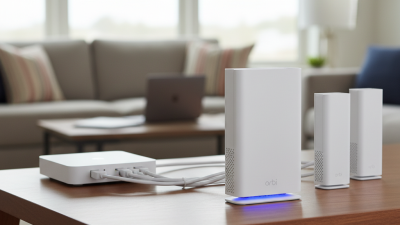
A mesh router platform depends on coordinated hardware and software, not just a strong signal. Satellite nodes, power adapters, antennas, and packaging must match the target model. China-based suppliers may support component sourcing, contract assembly, tooling, and production testing. Their role varies: some provide complete manufacturing services, while others specialize in a single part.
Details matter. Buyers should request the exact model revision, material specifications, test records, and production samples before approving an order. A wireless test room can reveal weak handoffs between nodes; a quick desk test may not. Suppliers can help document quality checks and regional certification requirements, but buyers should confirm that every item matches the intended market.
Verify who owns the design and who authorizes production. It can be awkward to ask, but assumptions create expensive surprises. Samples are useful, yet one good sample does not prove a whole production run will be consistent. Keep clear acceptance criteria, inspect early batches, and discuss replacement parts before shipment.
Even careful sourcing has gaps. That is worth admitting.

For global buyers comparing router suppliers, Wi-Fi 7 specifications deserve a closer look than headline speed claims. A 320 MHz channel can carry more data than narrower channels, especially when a compatible device is nearby. Picture a laptop in the same room transferring a large video file. The wider channel may help, but walls, interference, and local spectrum rules can limit its benefit. Not everywhere.
4096-QAM packs more data into each radio signal than earlier modulation schemes. It needs a strong, clean connection, so performance may fall when a device is distant or separated by concrete walls. Multi-Link Operation, or MLO, lets compatible devices use multiple frequency links to improve throughput or connection stability. Results depend on both the router and client support. Check the details.
When evaluating suppliers, ask for tested throughput across different rooms, supported frequency bands, and clear client compatibility information. Request practical test conditions, not just peak figures from a lab. Regional channel availability can vary, too. A specification sheet is useful, but it cannot predict every home or office. I would also verify firmware support before ordering; this is easy to overlook.
A strong supplier map separates OEM/ODM capability from component depth. The 2020 Annual Internet Report projected 29.3 billion connected devices worldwide by 2023, about 3.6 per person. That forecast highlights why buyers should check production scale, but volume alone does not prove quality. Ask whether the supplier owns design engineering, manages approved subcontractors, or simply coordinates assembly. Those roles carry different risks.
For RF, request test reports covering transmit power, receiver sensitivity, and performance across intended bands. For PCB production, compare layer count, copper thickness, impedance control, and inspection records. Antenna capability needs more than a datasheet: ask for tuning evidence from the final enclosure, since plastics and nearby cables can shift performance. A tidy supplier spreadsheet can still mislead. Verify process ownership through sample builds and factory audits.
Tips: Request a traceable sample lot, stack-up drawing, and chamber-test summary. Check revision control and who signs off changes. Small details matter. One weak point remains: supplier documents may describe ideal conditions, not your finished product. Confirm results with independent testing before committing to volume.
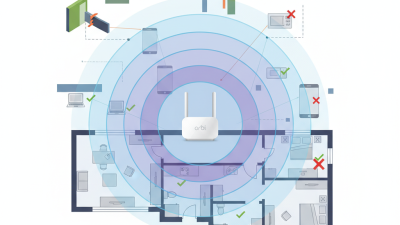
Global buyers comparing mesh-router suppliers should check what “tri-band” means in each specification. It may describe 2.4, 5, and 6 GHz radios, or two separate 5 GHz radios. Ask suppliers to state each band’s frequency, channel width, and role. A second 5 GHz radio may serve wireless backhaul, keeping client traffic off that link. But walls, neighboring networks, and device compatibility can reduce the expected gain.
Backhaul matters more than a headline speed. Wi-Fi Alliance’s Wi-Fi 7 technical overview identifies 320 MHz channels and Multi-Link Operation as key capabilities; these are potential advantages, not guaranteed home speeds. Ask for measured throughput at the gateway and at each mesh node, using the same test distance and wall layout. Request wired-backhaul results too. Then compare two-node and three-node configurations in a floor plan similar to the intended installation. More nodes are not always better: poorly placed units can create overlapping coverage without fixing a weak uplink. A concrete check: place one node beyond a thick wall, then inspect its backhaul rate and latency. Supplier test conditions are often incomplete. Note that gap, and verify claims with a pilot order before scaling.
Global Buyer Checks: Compare Tri-Band Radios, Backhaul, and Mesh Node Counts
These are representative radio-band configurations, not supplier or product specifications. Tri-band systems may use a second 5 GHz band or add a 6 GHz band; whether either band is dedicated to wireless backhaul depends on the model. Mesh node counts also vary by package and system capacity, so confirm included nodes, expansion limits, and Ethernet backhaul support with each supplier.
Export verification should go beyond a supplier’s compliance claim. For U.S. sales, check the exact router model in the FCC Equipment Authorization database and match its grant details to the label and radio configuration. For the European market, request the EU Declaration of Conformity and supporting Radio Equipment Directive test documents. CE marking is not, by itself, proof that every regional variant was tested. Small details matter: antenna changes can affect the evidence.
Wi-Fi 7’s often-quoted 46 Gbit/s figure is a theoretical PHY ceiling, not expected household throughput. IEEE 802.11be specifies the capabilities behind that peak; the Wi-Fi Alliance’s Wi-Fi CERTIFIED 7 technical overview highlights features such as 320 MHz channels and 4K QAM. Most buyers will see lower rates because client devices, channel width, interference, and backhaul all constrain performance. The number looks impressive. It can also mislead.
Tips: Ask for model-specific FCC grants, RED test reports, and a declaration matching the product label. Request a throughput test with the intended client and wired backhaul; record the room, band, and channel width. One awkward limitation: supplier test conditions may not resemble your customers’ homes.
| Assessment Dimension | Fact-Based Reference | What Global Buyers Should Verify | Evidence to Request |
|---|---|---|---|
| Supplier and product identity | Regulatory approvals and test reports apply to specific products, configurations, and responsible parties; they should not be assumed to cover every model from a supplier. | Confirm the exact model number, hardware revision, radio configuration, manufacturing site, and legal entity shown on the export and compliance documents. | Model-specific datasheet, product label photographs, manufacturing details, and a written model-to-document cross-reference. |
| FCC market access | For applicable radio-frequency devices marketed in the United States, FCC equipment authorization requirements may apply. The authorization route depends on the device and applicable FCC rules. | Check whether the exact model requires authorization, and confirm that the FCC ID and authorized configuration match the product being purchased. | FCC ID, applicable grant or authorization records, and test documentation; verify public records through the FCC equipment authorization database. |
| CE marking and EU radio compliance | Radio equipment placed on the EU market is subject to the Radio Equipment Directive (RED), 2014/53/EU. CE marking is supported by the applicable conformity assessment and technical documentation. | Confirm that the EU Declaration of Conformity identifies the exact model and applicable legislation and standards. A CE logo alone is not a substitute for supporting documentation. | Signed EU Declaration of Conformity, relevant test reports, product identification, and information on the conformity assessment route used. |
| Regional radio-frequency rules | Permitted frequency bands, power limits, and technical conditions vary by country or region. Availability of 6 GHz Wi-Fi is not globally uniform. | Identify destination markets before ordering. Check supported bands, channel widths, transmit-power settings, and any country-specific firmware restrictions for each destination. | Country-specific radio specification, destination-market test evidence where applicable, and confirmation of regional firmware or SKU variants. |
| Wi-Fi 7 PHY ceiling | Wi-Fi 7 (IEEE 802.11be) is associated with a theoretical aggregate PHY-rate ceiling of about 46 Gbit/s under maximum-capability assumptions, including wide channels and multiple spatial streams. | Treat 46 Gbit/s as a theoretical standard-level ceiling—not the expected speed of a single router link, client, or internet connection. Check the product’s actual radio and stream configuration. | Per-band specifications listing spatial streams, channel widths, modulation support, and the method used to calculate any advertised aggregate PHY rate. |
| 320 MHz channel support | Wi-Fi 7 supports channel widths up to 320 MHz in applicable configurations. Such operation is associated with 6 GHz and is subject to regional spectrum rules and device capabilities. | Verify that both the router and intended clients support the stated width, and that the destination market permits the relevant 6 GHz operation. | Radio configuration table, supported-channel list, and market-specific regulatory settings or documentation. |
| Multi-Link Operation (MLO) | MLO is a Wi-Fi 7 capability that can allow a device to use multiple links across supported bands, subject to implementation and client compatibility. | Confirm which bands and MLO modes are implemented, whether the feature is enabled in the supplied firmware, and whether compatible client devices are available for testing. | Feature specification, firmware release details, and interoperability test results using compatible Wi-Fi 7 clients. |
| Real-world throughput validation | PHY rate is the radio link signaling rate; usable application throughput is lower and varies with protocol overhead, interference, distance, client capability, and network conditions. | Request test results with stated test environment, client model and capabilities, band, channel width, distance, and whether the measurement is wired backhaul, wireless backhaul, or client throughput. | Repeatable test plan and results, including client-to-router and, for mesh products, node-to-node performance under defined conditions. |
| Mesh and backhaul configuration | Mesh performance depends on node placement, backhaul type, radio allocation, and the capabilities of connected clients; a mesh label alone does not specify throughput. | Clarify whether backhaul is wired, dedicated wireless, or shared with client traffic, and confirm the supported topology and included node count. | Network topology diagram, backhaul specifications, node configuration, and performance results for the proposed setup. |
| Firmware and security support | Wireless features and security behavior can depend on firmware. Update policies and security support periods are product-specific rather than guaranteed by a Wi-Fi generation alone. | Confirm update delivery, vulnerability-reporting contact, security support commitments, and whether regional firmware builds differ. | Firmware version and release notes, update policy, security contact, and written support-period terms. |
| Export and shipment documentation | Import requirements, product classification, labeling, and supporting documents depend on the destination market and shipment details. | Have the importer or customs broker validate the tariff classification and required documents for the destination. Do not treat a supplier’s general statement as destination-specific approval. | Commercial invoice, packing list, country-of-origin information, product labels, and destination-specific compliance documents requested by the importer. |