How to Choose the Best Network Router for Your Needs?
Selecting the right Network Router can significantly impact your internet experience. With a multitude of options available, it’s easy to feel overwhelmed. Understanding your specific needs is crucial. Some routers shine in speed, while others focus on range or security. A poor choice can lead to frustrating network issues.
Consider what devices you'll connect. Different routers support varying numbers of connections. If your household is tech-heavy, you might need a more robust option. On the other hand, a simple setup may suffice for minimal use. Awareness of your internet habits is essential for informed decisions.
Additionally, do not underestimate the importance of future-proofing. Technology evolves quickly. A router may serve your needs today but fall short in a year. Assessing features like Wi-Fi 6 capability can enhance long-term value. Ultimately, choosing a Network Router requires balancing immediate needs with future aspirations.

Understanding Your Internet Speed Requirements and Usage Patterns
Understanding your internet speed requirements and usage patterns is crucial when selecting the best network router. Different households have varying needs. Streaming high-definition videos, gaming, or working from home requires a reliable connection. Take a moment to evaluate the number of devices connected simultaneously.
For casual users, a basic router may suffice. However, heavy users might experience slowdowns. Recurrent buffering during a movie can cause frustration. Assess the internet speed provided by your service provider. Ideally, your router should support a speed that meets or exceeds this rate. If your plan offers 200 Mbps, consider a router that can handle higher speeds for better performance.
Monitor your usage patterns. If your family streams videos and your kids are gaming, your needs are different. Flexibility in router features, like dual bands, can accommodate multiple connections. Prioritize features that suit your lifestyle. It may feel daunting, but investing time in understanding these patterns will ensure better long-term satisfaction with your internet setup.
How to Choose the Best Network Router for Your Needs?
| Router Type |
Speed (Mbps) |
Range (ft) |
Users Supported |
Best For |
| Single-Band Router |
300 |
150 |
10 |
Light Browsing |
| Dual-Band Router |
600 |
200 |
20 |
Gaming & Streaming |
| Tri-Band Router |
3000 |
300 |
50+ |
Large Households |
| Mesh Router |
2000 |
300+ |
Multiple Devices |
Whole Home Coverage |
| Gaming Router |
2400 |
200 |
30 |
Online Gaming |
Identifying Different Types of Routers: Types and Features Explained
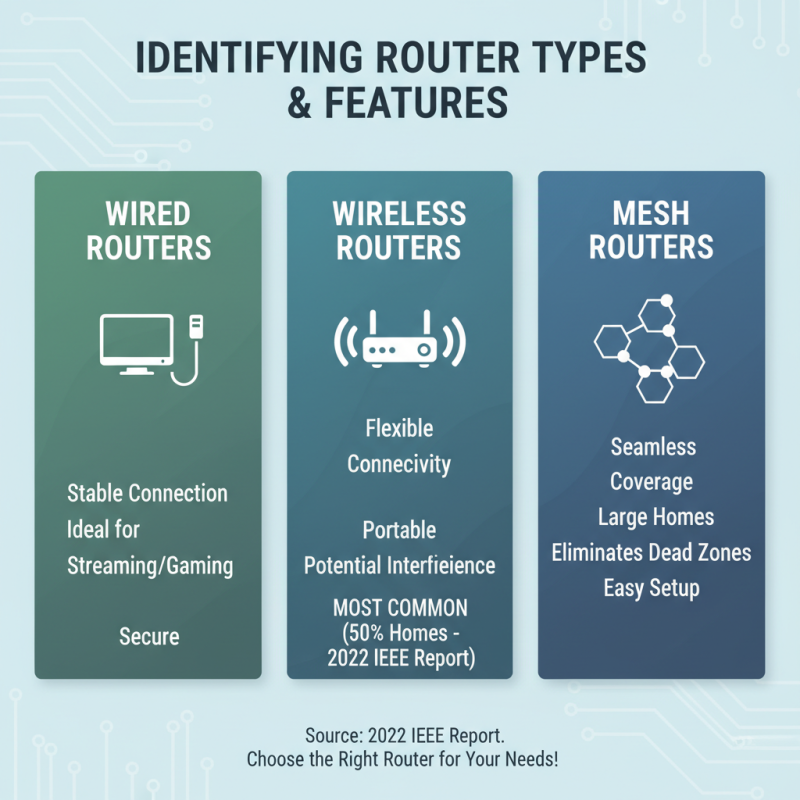
When choosing a router, recognizing the types and features is crucial. There are several types: wired, wireless, and mesh routers. Wired routers provide stable connections and are ideal for streaming. Wireless routers offer flexibility, but may face interference. Mesh routers allow seamless coverage and are useful in larger homes. According to a 2022 report by the Institute of Electrical and Electronics Engineers, over 50% of homes prefer wireless solutions for their convenience.
Consider speed and range. Many users overlook the importance of these metrics. A router’s speed is measured in Mbps, while range impacts signal strength. Reports suggest that a router's range can decrease by 30% in densely populated areas. Users often find themselves frustrated when far from the router. Dual-band routers operate on both 2.4GHz and 5GHz frequencies. This helps manage bandwidth for multiple devices.
Security is another critical aspect often neglected. Many routers come with basic protections, but that may not suffice in today's cyber landscape. Frequent firmware updates are essential to mitigate vulnerabilities. A 2023 survey by Cybersecurity Ventures found that nearly 70% of small businesses experience cyber threats. Evaluating a router's security features should be a priority to safeguard your network effectively.
Evaluating Range and Coverage: Importance of Frequency Bands and Antennas
When selecting a network router, evaluating range and coverage is crucial. The frequency bands play a significant role in connectivity. Most routers operate on 2.4 GHz and 5 GHz bands. The 2.4 GHz band offers wider coverage but at slower speeds. Conversely, the 5 GHz band provides faster speeds but a shorter range. Understanding your space is essential. For larger homes, a dual-band router is ideal, allowing for flexibility in device connectivity.
Antennas also greatly influence a router's performance. More antennas often mean better signal distribution. Some routers even come with adjustable antennas, enabling you to direct the signal where it's needed most. However, the number of antennas isn't the only consideration. Placement matters too. A router tucked away in a corner will struggle to provide adequate coverage throughout the house. Experimenting with different locations can yield surprising improvements.
Range and coverage aren't just technical terms; they impact daily activities like streaming and gaming. Slow connections can be frustrating, especially during peak usage. Assessing a router's capabilities before buying helps avoid potential issues. It's not always as straightforward as it seems. Each living space is unique, so take the time to reflect on your specific needs before making a decision. Be mindful that future expansions of your network might require more advanced solutions.
Analyzing Security Features: WPA3 and Other Essential Protocols
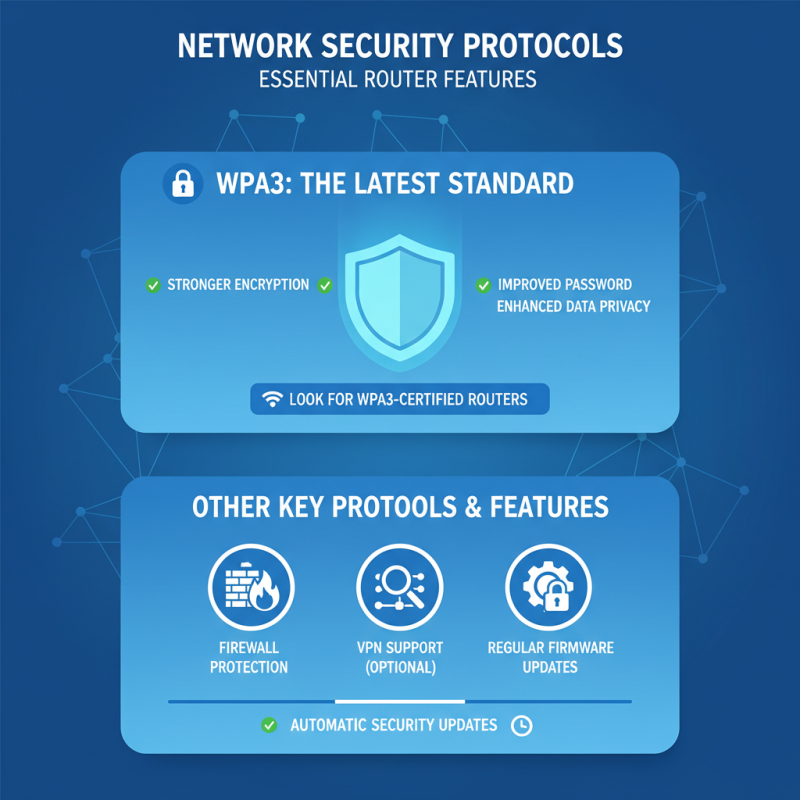
When selecting a network router, security features are paramount. WPA3 stands as the latest Wi-Fi security protocol, enhancing protection significantly over its predecessor, WPA2. It offers stronger encryption and improved resistance against password guessing attacks. Users should look for routers that explicitly support WPA3, as it’s designed to protect personal data and improve overall network integrity.
Additionally, integrating features like VPN support and automatic firmware updates can bolster security. A router with these capabilities provides users with an extra layer of privacy. However, not every router on the market has kept pace with these trends. Some may still rely on outdated protocols. Thus, it's essential to stay informed about the specifications and security updates of available devices.
It's worth noting that even with robust security features, no system is entirely foolproof. Cyber threats evolve rapidly. This means that consumers should regularly review their network settings and be proactive about updates. Learning how to monitor device connections and recognizing unusual activity can greatly enhance overall security. A router’s setup can have flaws, and identifying these vulnerabilities requires diligence and knowledge.
Assessing Budget vs. Performance: Cost-Effective Solutions for Home or Office
When choosing a network router, understanding your budget and performance needs is essential. A router should cater to specific tasks, whether it's for streaming, gaming, or remote work. Generally, higher performance means a higher cost. But you can find cost-effective solutions that don't compromise quality.
Tip: Assess your starting point. Determine your internet speed and the number of devices connected. This can help prioritize the performance you need. For example, if only a few devices will connect, a mid-range router could suffice.
Some budget routers struggle with connectivity during peak usage. This can be frustrating, especially in a home office. Look for user reviews that highlight real-world performance. It’s essential to weigh the information available without getting swayed by flashy marketing. Sometimes, less expensive models can outperform their pricier counterparts.
Tip: Consider scalability. As your needs grow, will your router adapt? A good router should support future upgrades. Think about whether you might add smart home devices or expand your remote work setup. Investing in a reliable router now may save you costs in the long run.