In today's rapidly evolving digital landscape, the importance of a robust network infrastructure cannot be overstated. According to a recent report by Gartner, over 85% of enterprises cite reliable connectivity as crucial for business growth. A key player in this domain is the Juniper Router, known for its innovative features and superior performance.
Juniper Routers are gaining traction among organizations seeking efficiency. They offer advanced capabilities such as intelligent traffic management and enhanced security protocols. Research shows that 75% of IT leaders prioritize security features when choosing routers. This focus on protection reflects growing concerns around data breaches and network vulnerabilities.
However, while Juniper Routers deliver impressive functionalities, some users report complexities in configuration. It raises a question: Are the challenges worth the benefits? Understanding the top features can help in making informed decisions. The journey toward a more resilient network begins with exploring these pivotal elements of Juniper Routers.

When choosing routers, performance specifications are crucial. A top feature to consider is throughput. It defines how much data the router can process every second. High throughput ensures quick and reliable connections.
Another vital specification is latency. Lower latency means faster response times. This is critical for applications like online gaming or video conferencing. Users often overlook this. They might see speed but miss the lag factor.
**Tip:** Always check both throughput and latency in performance tests. They often reveal more than just speed. Look for routers that support Quality of Service (QoS). This prioritizes important traffic, improving experience for key applications.
Reliability should not be ignored. Uptime is essential for businesses. Frequent outages lead to lost productivity. Investing in routers with robust failover mechanisms can prevent this. Not every router provides the same level of reliability.
**Tip:** Review real-world feedback from users. Their insights can highlight reliability and performance differences. Performance may fluctuate under high load, making it important to understand everyday usage patterns. Aim for routers that maintain their specs under stress.

When it comes to advanced security features in routers, several important elements stand out. These features protect data and ensure your network remains secure.
Intrusion detection and prevention systems (IDPS) play a pivotal role in identifying and stopping potential threats in real-time. This means that your network can respond to attacks actively and not passively.
Another crucial aspect is the implementation of robust encryption methods. Secure protocols like IPsec and SSL can safeguard data during transmission. They ensure that only authorized users can access sensitive information. Many networks might still overlook the importance of timely software updates, which can lead to vulnerabilities.
Tip: Regularly update your security protocols. Schedule updates as part of your routine maintenance.
Firewall capabilities are also important. A strong firewall inspects incoming and outgoing traffic and can block malicious activities. Configuring these settings properly is essential. However, many users tend to underestimate the complexity of firewall configurations, leading to potential gaps in security.
Tip: Don’t rush through firewall setups. Assess each rule and its implications carefully.
Monitoring tools provide visibility into traffic patterns and anomalies. They help network administrators identify unusual activities. Despite having these tools, many networks fail to act on alerts promptly. This delay can have serious consequences.
Tip: Analyze alerts in real time to enhance responsiveness.
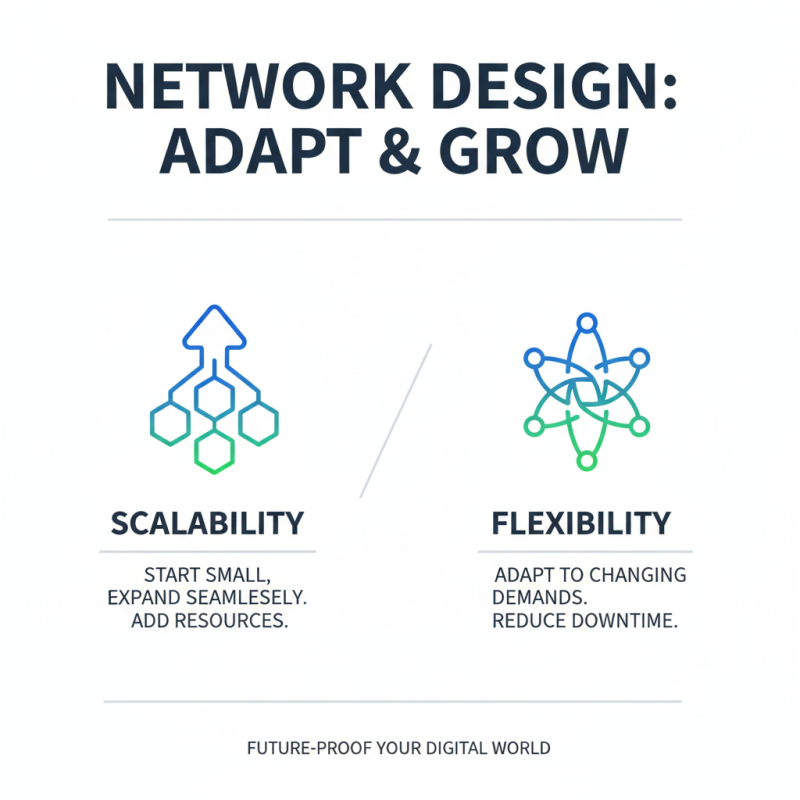
Scalability and flexibility are crucial in network design. A well-designed network can adapt to changing demands. This is vital in our fast-paced digital world. You can start small and grow as needed. With the right architecture, expansion becomes seamless. Teams can add resources without significant disruptions. This feature reduces downtime, keeping services running smoothly.
Consider the challenges of rigid systems. They can stifle growth and create bottlenecks. Sometimes, companies face unexpected traffic spikes. A flexible network allows quick adjustments. Scaling up shouldn’t be a headache. Teams need to plan for future requirements. It’s about thinking ahead, yet being ready to adapt.
Effective network design also addresses diverse needs. Different applications demand varied resources. Some require high bandwidth, while others need low latency. A versatile setup can cater to both. It helps in optimizing performance across the board. However, implementing flexibility might lead to overcomplication. Balancing simplicity with advanced features is essential. This ongoing reflection can refine the design process.
User-friendly management tools are essential for networking professionals. They simplify complex tasks, making it easier to monitor and configure network devices. Many interfaces provide a graphical view. This can significantly reduce the time spent on everyday tasks.
Tips: Familiarize yourself with the dashboard. A well-organized dashboard can save you time. Look for features that allow bulk changes. This will make your work more efficient.
Navigating through various settings can be overwhelming, especially for newcomers. Simplified menus help streamline operations. Some advanced settings might need exploration, which can be daunting. But mastering these can enhance network performance.
Tips: Regular practice can boost your confidence. Spend time exploring each feature. Share findings with your team for collaborative learning.
| Feature | Description | Benefits | User Experience |
|---|---|---|---|
| Intuitive GUI | User-friendly graphical user interface for easy navigation. | Simplifies network management for non-technical users. | Enhances accessibility and reduces training time. |
| Command-Line Interface | Powerful CLI for advanced configuration and troubleshooting. | Allows for detailed network adjustments and scripts. | Preferred by network professionals for control. |
| Live Monitoring | Real-time network performance monitoring tools. | Identifies issues immediately, improving uptime. | Users can quickly address slowdowns or outages. |
| Automated Updates | Automatic firmware and software updates. | Ensures the network runs on the latest features and security updates. | Minimizes manual work and potential security risks. |
| Multi-Layer Security | Multiple layers of security features including firewalls. | Protects against a variety of threats. | Users feel safe with built-in security measures. |
| VPN Support | Support for Virtual Private Networks for secure remote access. | Enables secure connections for remote users. | Facilitates secure workflows and data protection. |
| QoS Features | Quality of Service capabilities for traffic management. | Optimizes network performance for critical applications. | Improves overall user satisfaction with service reliability. |
| Scalability Options | Flexible scaling to accommodate growth. | Supports growing network demands without major upgrades. | Provides a future-proof solution for businesses. |
| Integrated Analytics | Built-in analytics for insights on network usage. | Helps in identifying trends and network performance issues. | Users can make data-driven decisions for improvements. |
| Support and Community | Access to extensive support resources and user communities. | Users can easily troubleshoot issues and share knowledge. | Enhances user confidence and engagement. |
In the rapidly evolving realm of networking, today’s routers must support advanced protocols. Innovative features define the capabilities of modern networking systems. Advanced routers can facilitate cutting-edge technologies, ensuring optimal performance and reliability.
Recent studies indicate that over 70% of businesses are transitioning to software-defined networking. This shift emphasizes the need for routers that can support diverse protocols like MPLS, BGP, and Segment Routing. These technologies enhance flexibility and scalability. However, adapting to these protocols can be challenging. A well-implemented protocol can significantly improve data flow efficiency, yet, many organizations struggle with integration issues.
Moreover, the demand for automation in network management is rising. A recent survey revealed that 65% of IT managers prioritize automated solutions to reduce human error. However, achieving seamless integration involves learning curves and potential pitfalls. Misconfigurations may lead to downtime and operational setbacks. While cutting-edge features are beneficial, it’s essential to invest in training and support for network teams. Balancing innovation with capability development is crucial for successful implementation.