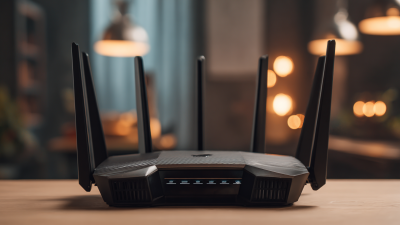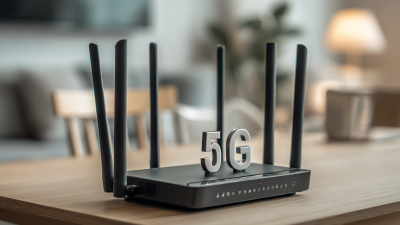
Industrial networks in 2026 must connect machines reliably across factories, utility sites, transport systems, and remote facilities. An Industrial Router helps link equipment to local networks or cloud services, but the right model depends on the site. A production line with Ethernet ports has different needs from a solar installation relying on cellular coverage. Conditions vary.
Common types include wired industrial routers, Wi-Fi models, and cellular routers using 4G LTE or 5G. Some combine several connection methods, while others add VPN functions, firewall controls, or support for multiple SIM cards. Rugged designs may handle vibration, dust, heat, and wider temperature swings. These features are not interchangeable. A metal enclosure alone does not prove that a router suits a harsh environment; check its published ratings and test conditions.
This guide compares leading router types by connectivity, deployment needs, and practical trade-offs. It considers factors such as port count, network failover, management tools, power options, and long-term support. For example, a remote pump station may need cellular backup, while a factory cabinet may prioritize stable Ethernet and clear diagnostics. Not always. Signal strength, carrier availability, cybersecurity practices, and compatibility with existing devices can change the decision. Product claims deserve scrutiny, and specifications should be checked against the actual installation. No single type is best for every site. The goal is to understand what each design does well—and where it may fall short.
What Defines an Industrial Router in 2026?
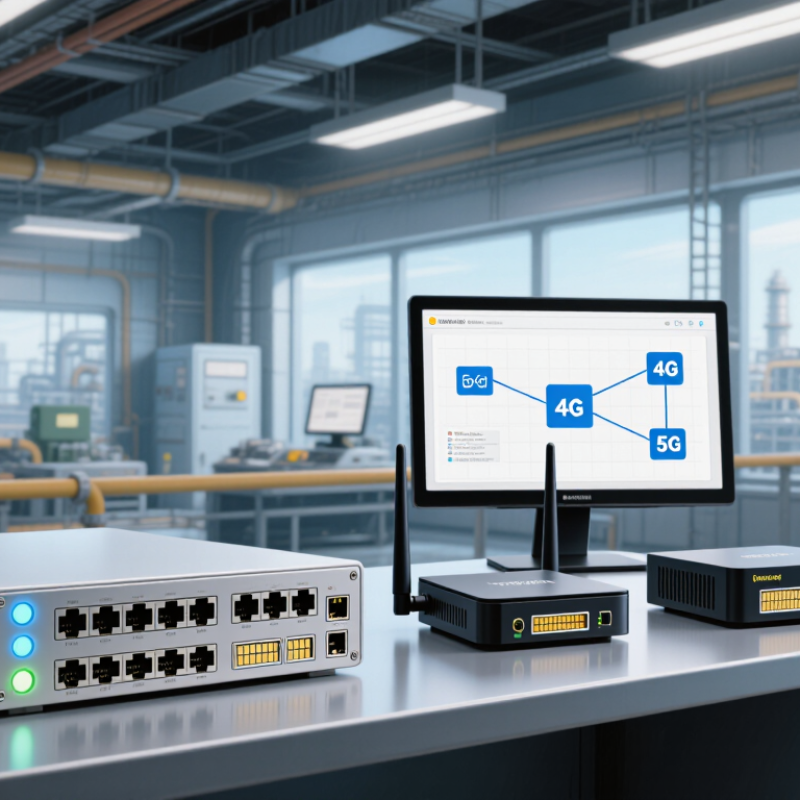
An industrial router connects operational technology, such as sensors, controllers, and machines, to local or wide-area networks. It routes traffic; it may also support segmentation, firewall rules, VPNs, and cellular backup. These features vary, so check the device’s documented capabilities rather than assuming every router includes them. Industrial design typically means tolerance for heat, vibration, electrical noise, and continuous operation. More than rugged hardware. Mounting it beside a humming pump is only part of the test.
The November 2024 Mobility Report projects 4.5 billion cellular IoT connections by 2030, reflecting growing demand for connected equipment. IoT Analytics’ State of IoT 2024 report estimates 16.6 billion connected IoT devices at the end of 2023. These figures describe different connection categories, not router sales. Still, they show why industrial routers must handle many endpoints, changing network conditions, and long service lives. NIST’s SP 800-82 Revision 3 also emphasizes that operational technology has distinct security and availability needs. That definition is useful, though imperfect: ruggedness alone says little about recovery after a link failure.
Tips: Confirm operating-temperature and vibration ratings against the installation site. Test failover with real traffic, not just a status light. Keep remote access limited and documented. Small details matter.
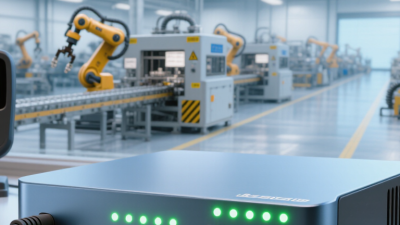
Industrial routers are often classified by how they connect a site to its devices and to the wider network. The main options are cellular, wired Ethernet, Wi-Fi, and hybrid models. Each suits a different installation, and the best fit depends on coverage, cable access, and the cost of downtime.
Cellular routers use 4G or 5G networks to link remote cabinets, vehicles, or temporary sites. Check signal strength where the router will actually sit; a metal enclosure can weaken reception. Dual-SIM models may switch between carriers, but failover behavior should be tested rather than assumed. Coverage maps are only a starting point.
Wired Ethernet routers provide stable links between machines, control systems, and network switches. Wi-Fi models help connect mobile equipment, though walls and electrical noise can affect performance. Hybrid routers combine options, such as Ethernet for local devices and cellular service for an uplink. Useful, but not automatically better. During selection, verify port counts, supported protocols, operating temperature, and recovery behavior after a lost connection. A router that reconnects slowly can leave useful data stranded. Yet specifications alone rarely reveal how it will behave on a busy factory floor.
In 2026, cellular industrial routers and wired Ethernet routers remain the most common types. Cellular models use 4G LTE or 5G to connect remote equipment, vehicles, and temporary sites. A router mounted inside a roadside cabinet, for example, can send sensor readings without a fixed broadband line. Ethernet models suit factories with existing cable runs, where stable connections matter more than mobility. They often link controllers, cameras, and monitoring systems across the plant floor.
Demand for connected equipment supports this pattern. IoT Analytics’ State of IoT 2024 report estimated 18.8 billion connected IoT devices worldwide in 2024 and projected nearly 40 billion by 2030. That is not a router shipment count, so it cannot prove a precise market ranking. Still, it signals why dependable wired and cellular links are widely used. The categories blur. Some cellular routers also provide Wi-Fi or Ethernet ports.
Industrial Wi-Fi routers are common where staff need local wireless access or machines move between work areas. Serial and fieldbus gateways also remain useful for older equipment, though they may translate protocols rather than route network traffic. That distinction matters. A packaging line might use Ethernet for fixed controllers, Wi-Fi for handheld terminals, and cellular backup for remote support. The best choice depends on coverage, interference, and downtime costs; a neat ranking rarely fits every site.
A practical overview of widely used industrial router categories. Commonness describes general deployment patterns, not a measured market-share ranking; actual suitability depends on the site, network, and application.
| Industrial Router Type | General Commonness | Typical Connectivity | Common Applications | Key Selection Considerations |
|---|---|---|---|---|
| Wired Ethernet Router | Very common | Ethernet WAN and LAN; may support multiple ports and VLANs | Factory networks, machine cells, control cabinets, and wired links between production areas | Port count and speed, environmental rating, routing and firewall functions, and support for industrial protocols where required |
| Cellular 4G LTE Router | Very common | Mobile broadband with Ethernet and often Wi-Fi | Remote equipment, temporary sites, backup internet connections, and locations without fixed broadband | Carrier and band compatibility, antenna placement, signal conditions, SIM management, and data-plan requirements |
| 5G Industrial Router | Common and growing | 5G mobile broadband, often with 4G fallback, Ethernet, and optional Wi-Fi | High-throughput industrial sites, mobile systems, video monitoring, and applications needing lower network latency | Local 5G coverage, supported bands, antenna configuration, service availability, and whether the application benefits from 5G |
| Wi-Fi Industrial Router | Common | Wireless LAN with Ethernet uplinks or WAN connections | Wireless access for maintenance devices, movable work areas, warehouses, and machine networks | Coverage, interference, security configuration, roaming needs, and separation of operational and guest traffic |
| DSL or Cable WAN Router | Common where fixed broadband is available | DSL or cable internet with Ethernet LAN | Small industrial sites, offices attached to plants, and facilities with established wired broadband | Local service availability, provider requirements, WAN failover options, and suitability for the operating environment |
| Fiber-Optic WAN Router | Common in larger or bandwidth-intensive sites | Fiber WAN handoff, typically with Ethernet LAN interfaces | Campus networks, large facilities, data-intensive production systems, and long-distance site connections | Optical interface type, link speed, fiber handoff compatibility, redundancy, and required routing capacity |
| VPN and Secure Remote-Access Router | Common across connected industrial networks | Ethernet, cellular, or fixed broadband with encrypted VPN connections | Remote maintenance, secure site-to-site networking, and controlled access to equipment networks | Encryption and authentication options, access controls, audit needs, update practices, and alignment with security policies |
| Ruggedized Industrial Router | Common in harsh or mobile environments | May combine Ethernet, cellular, Wi-Fi, or fiber connectivity | Outdoor installations, transport systems, utility sites, and areas exposed to vibration or temperature extremes | Operating temperature, vibration resistance, ingress protection, mounting method, power input, and applicable certifications |
Industrial routers serve different jobs, even when their specifications look similar. On a packaging line, a wired Ethernet router can connect controllers and sensors with steady, predictable links. It suits fixed equipment and structured networks. A compact design may fit a control cabinet, but heat, vibration, and electrical noise still matter. Less is sometimes enough.
Cellular routers are useful at remote sites where cable runs are costly or unavailable. A pumping station, for example, may send pressure readings over a mobile connection to a control room. Signal strength can change with weather, terrain, and nearby structures, so test the installation location before relying on it. Wi-Fi routers fit warehouses and mobile work areas, where equipment moves between access points. Coverage needs testing.
Serial-capable routers help connect older machines that communicate through interfaces such as RS-232 or RS-485. They can bridge operational data to modern networks, but protocol settings and update rates need careful checking. Rugged routers are designed for harsher conditions, yet “rugged” does not mean immune to every failure. Match temperature, ingress, and vibration ratings to the actual site. In practice, no checklist catches every metal enclosure or moving vehicle; field testing often reveals a weak spot the specifications missed.
A comparison of peak standardized or nominal link rates for connectivity commonly found in industrial routers and gateways.
4G and 5G cellular connections are commonly used for remote sites and backup links; Wi-Fi supports local wireless devices; and 10 Gigabit Ethernet suits high-bandwidth wired networks. Values show theoretical or nominal peak link rates, not typical field performance. Actual throughput depends on the network, configuration, signal conditions, and equipment.
Reference points: LTE-Advanced peak rate, 5G IMT-2020 peak rate, Wi-Fi 6 theoretical aggregate PHY rate, and 10GbE nominal line rate.
Choosing an industrial router starts with the job site, not the port count. List the devices, protocols, and data volumes it must support.
IoT Analytics’ State of IoT 2024 estimated 16.6 billion connected IoT devices worldwide in 2023, with 18.8 billion expected by year-end 2024.
That growing network makes compatibility and capacity practical concerns. Check cellular bands, Ethernet and serial interfaces, VPN support, and throughput under peak traffic—not just headline speeds.
Security matters just as much. Verizon’s 2024 Data Breach Investigations Report found that 68% of breaches involved a non-malicious human element.
For remote access, look for multi-factor authentication, permission controls, encrypted connections, and useful access logs. Confirm how firmware updates are delivered and whether the router’s support life fits the equipment’s expected service life. A spec sheet can still mislead.
Then consider the physical environment. A router beside a vibrating pump or inside a hot cabinet faces different demands than one in a clean control room. Check operating temperature, vibration tolerance, enclosure rating, power input, and mounting options. Test failover and signal strength at the actual installation point; a quick desk test may miss dead zones or brief outages. The best fit is not always the most feature-rich one. It is the unit that remains manageable when conditions get messy.