How to Choose the Fastest Router for Your Home Network in 2025
In an era where seamless connectivity is paramount, choosing the fastest router for your home network in 2025 is more critical than ever. As our reliance on the internet grows, so does the demand for high-speed, reliable networks that can support a myriad of devices and bandwidth-intensive applications. Renowned network expert Dr. Emily Carter states, "A fast router is not just an option; it's the foundation of a connected home." With smart devices, streaming services, and remote work becoming ubiquitous, the role of a router has evolved from a simple connectivity tool to the backbone of our digital lives.
When selecting the fastest router, various factors come into play. Speed, range, and the ability to manage multiple connections simultaneously are essential elements that determine a router's effectiveness. In 2025, features such as Wi-Fi 6E support and advanced security protocols will be vital considerations for consumers aiming for optimal performance. Understanding these components can help transform your home network into a robust, efficient environment that meets the demands of modern technology.
Ultimately, the journey to find the fastest router involves balancing your specific needs with the latest technological advancements. As we explore the best options available, remember that a high-speed router is essential for enhancing your online experience and keeping your home network running smoothly.

Understanding Router Speed Metrics and Standards in 2025
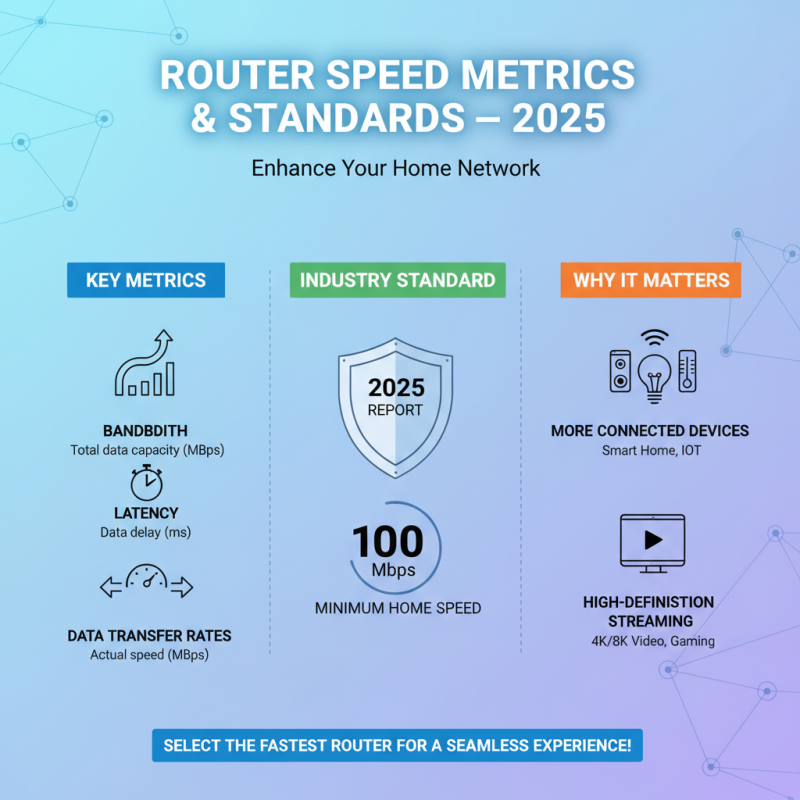
In 2025, understanding router speed metrics and standards is crucial for selecting the fastest router to enhance your home network. The most commonly referenced metrics include bandwidth, latency, and data transfer rates, each playing a significant role in determining overall network performance. According to the latest industry report by the International Telecommunication Union, the average household now requires a minimum speed of 100 Mbps to support the increasing number of connected devices, which typically ranges from smart home appliances to high-definition streaming services.
Router standards have also evolved, with Wi-Fi 6 and the emerging Wi-Fi 6E becoming the benchmarks for speed and efficiency. Wi-Fi 6 boasts a maximum throughput of 9.6 Gbps under optimal conditions, allowing multiple devices to connect simultaneously without compromising speed. Furthermore, the implementation of orthogonal frequency-division multiple access (OFDMA) technology in Wi-Fi 6 reduces latency, making it ideal for activities that demand real-time data transfer, such as online gaming and video conferencing. Research by the Wi-Fi Alliance highlights that networks employing these newer standards can handle up to four times as many devices as their predecessors, positioning them as an essential consideration for modern households.
Factors Influencing Router Performance for Home Use
When selecting a router for optimal performance in your home network, several critical factors must be considered. First and foremost is the speed specifications the router supports. Look for routers that adhere to the latest wireless standards, such as Wi-Fi 6 or 6E, which provide higher throughput rates and improved efficiency in handling multiple devices. Furthermore, a router's frequency bands can significantly influence performance; dual-band or tri-band routers offer more channels, reducing congestion and allowing for a smoother experience, particularly in homes with multiple users.
Another essential aspect is the range and coverage provided by the router. The placement of the router and the materials used in your home can affect signal strength and overall performance. Routers equipped with advanced antenna technology can enhance coverage, ensuring that every corner of your home receives a strong signal. Additionally, consider features such as Quality of Service (QoS), which prioritizes bandwidth allocation for specific devices or applications, ensuring that high-demand tasks like gaming or streaming are undisturbed. By focusing on these performance factors, you can make an informed decision when choosing the most suitable router for your home network in 2025.
Identifying the Best Router Brands and Models for Speed
When selecting a router that offers the best speed for your home network, it's essential to consider several key factors that set premier brands and models apart. A high-quality router typically boasts advanced technologies such as Multi-User Multiple Input Multiple Output (MU-MIMO) and beamforming, which enhance connectivity by ensuring that multiple devices can operate simultaneously at optimal speeds. Additionally, look for routers that support the latest Wi-Fi standards, which enable faster data transfers and reduce latency, providing a smoother online experience.
Another important aspect is the frequency bands available on the router. Dual-band and tri-band routers allow for better distribution of network traffic and can significantly improve performance in environments with many connected devices. Brands that focus on innovative network management features often incorporate user-friendly interfaces and apps that make it easier to prioritize bandwidth for specific devices or applications. These functionalities are crucial for households with diverse internet needs, from streaming and gaming to remote work and smart home devices, ensuring that users can enjoy seamless connectivity without frustrating slowdowns.
Router Speed Comparison for Home Networks in 2025
Setting Up Your Router for Optimal Performance
When setting up a router for optimal performance in your home network, it is crucial to consider factors such as placement, configuration, and network management tools. Research indicates that the placement of your router can significantly affect its performance; ideally, it should be located in a central position in your home, away from walls and obstructions. According to a report by the Wireless Broadband Alliance, optimal router placement can enhance signal strength by up to 30%, improving coverage and reducing dead zones in your living space.
Additionally, configuring your router correctly is essential for maximizing its capabilities. A study by the Broadband Forum found that adjusting settings such as channel selection and bandwidth prioritization can lead to a 20-50% increase in overall speed and efficiency. Enabling Quality of Service (QoS) settings allows you to prioritize traffic for devices that require stable connections, such as gaming consoles or smart TVs, ensuring they perform well even in a busy household. Furthermore, regular firmware updates are critical to accessing the latest security features and performance enhancements, contributing to a more reliable network experience.
Lastly, utilizing network management tools can provide valuable insights into your home network's performance. According to research from the American Consumer Institute, households that actively monitor their router settings and connected devices report a 40% increase in satisfaction regarding their internet experience. These tools can help identify bandwidth hogs, manage guest access, and troubleshoot connectivity issues, allowing you to maintain optimal performance as your network demands evolve.
| Router Model |
Max Speed (Mbps) |
Wi-Fi Standard |
Coverage Area (sq ft) |
Price ($) |
| Model A |
3000 |
Wi-Fi 6 |
3500 |
199 |
| Model B |
2400 |
Wi-Fi 5 |
3500 |
149 |
| Model C |
4800 |
Wi-Fi 6E |
4000 |
349 |
| Model D |
6000 |
Wi-Fi 6 |
4500 |
399 |
| Model E |
1800 |
Wi-Fi 5 |
2500 |
99 |
Future-Proofing Your Home Network for Increasing Speed Demands
As we approach 2025, the rapid evolution of technology demands that home networks be prepared for ever-increasing speed requirements. The proliferation of smart devices, ultra-HD streaming, and high-speed gaming continues to strain traditional networking equipment. According to a recent report from the International Telecommunications Union (ITU), global internet traffic is expected to triple by 2025, necessitating routers that not only meet current demands but are also capable of accommodating future advancements.
When selecting a router, prioritize models that support the latest Wi-Fi standards, such as Wi-Fi 6 and emerging Wi-Fi 6E. These protocols offer higher throughput, increased capacity, and improved performance in crowded environments—all essential for maintaining seamless connectivity as more devices connect to your home network. Data from research firm IDC indicates that 80% of homes will have multiple connected devices by 2025, highlighting the importance of a robust network infrastructure.
Tips:
- Look for routers with multi-gigabit Ethernet ports to ensure they can handle high-speed wired connections, essential for gaming and streaming services.
- Consider routers with advanced features like Quality of Service (QoS) to prioritize bandwidth allocation for critical applications, ensuring optimal performance during peak usage times.
- Evaluate options that provide comprehensive security protocols, as increasing connectivity can also lead to heightened vulnerability to cyber threats.
By focusing on these aspects, you can create a future-proof home network that meets the dynamic speed demands of tomorrow.