Why Choose Juniper Routers for Your Network Infrastructure Needs?
In the rapidly evolving landscape of network infrastructure, the choice of routers plays a pivotal role in determining the overall efficiency, performance, and security of an organization’s digital environment. One of the frontrunners in this domain is the Juniper Router, known for its robust performance and reliability. As businesses increasingly rely on data-driven processes, the need for reliable network solutions becomes essential, leading many to consider the advantages offered by Juniper technology.
The Juniper Router stands out among its competitors due to its advanced features, high scalability, and secure architecture, which are crucial for accommodating varying workloads and the growing demands of modern applications. Organizations looking to streamline their operations and enhance connectivity find Juniper Routers particularly appealing, as they not only support high bandwidth requirements but also effectively manage traffic flow across complex networks.
Electing to integrate Juniper Routers into your network infrastructure may prove to be a strategic decision, ensuring not only immediate benefits in terms of reliability and speed but also long-term value through future-proof technology. As we explore the reasons to choose Juniper Routers, it becomes clear that their capabilities align well with the evolving needs of today's enterprises, making them a preferred choice for those seeking optimal network performance and security.

Key Features of Juniper Routers Enhancing Network Efficiency
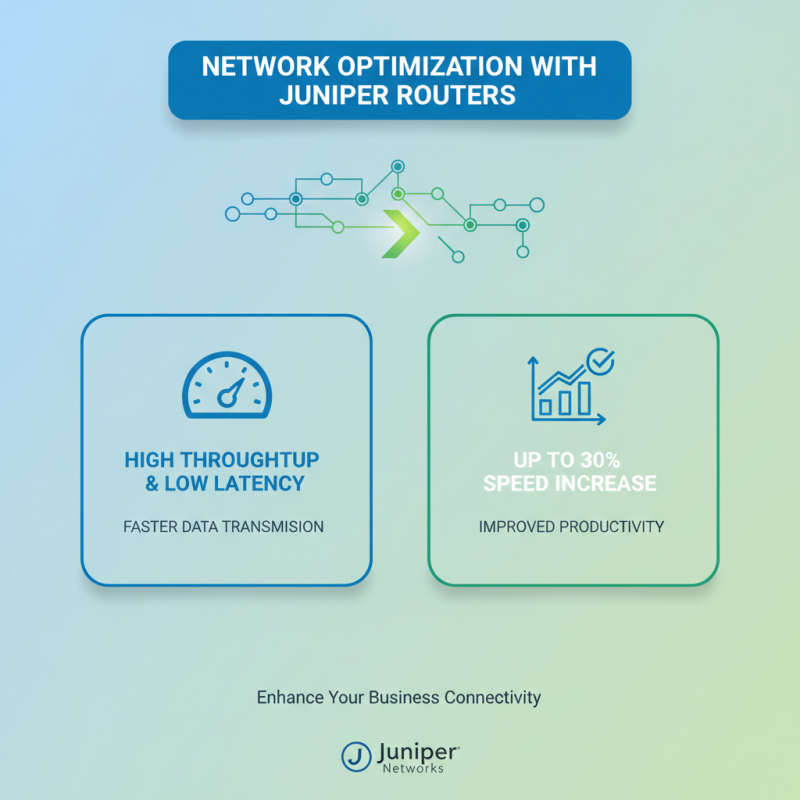
When considering network infrastructure, the choice of routers can significantly impact performance and reliability. Juniper routers offer several key features that enhance network efficiency, making them a preferred option for businesses looking to optimize their connectivity. These routers are designed to support high throughput and low latency, essential for handling the increasing demand for bandwidth. According to a recent report by Gartner, organizations that utilize high-performance routers can experience up to a 30% increase in data transmission speeds, resulting in improved overall productivity.
One of the standout features of these routers is their robust security protocols. With cyber threats becoming increasingly sophisticated, having built-in security measures is crucial. A study by Cybersecurity Ventures predicts that global spending on cybersecurity will exceed $1 trillion between 2021 and 2025. Choosing a router that integrates advanced security features can mitigate risks and protect sensitive data, ensuring that network operations remain seamless and secure.
**Tip:** When selecting a router, ensure it offers scalable options that can grow with your organization. This future-proofing tactic will save time and costs associated with frequent upgrades. Moreover, look for routers that provide comprehensive analytics and reporting capabilities, as these can offer valuable insights into network performance and help in proactive maintenance.
Performance Metrics: Comparing Juniper Routers to Competitors
When evaluating network infrastructure solutions, performance metrics serve as a crucial benchmark for determining the right router for your needs. Reliability, throughput, and latency are three primary factors that differentiate high-quality routers from their competitors.
 In terms of reliability, certain routers consistently outperform others, maintaining connection stability and minimizing downtime, which is essential for business continuity.
Throughput and latency are equally important in assessing a router's efficiency. High-throughput routers can handle large volumes of data with ease, ensuring seamless communication across a network. This is particularly vital for organizations that require robust data transfer rates for applications such as video conferencing and large file sharing.
Conversely, low latency enables quicker response times, which is critical for real-time applications and user experience. By prioritizing these performance metrics, businesses can make informed decisions, ensuring their network infrastructure supports both current demands and future growth.
Cost-Benefit Analysis of Implementing Juniper Routers
In the realm of network infrastructure, implementing efficient and reliable routers is a critical element for sustaining smooth operations. A cost-benefit analysis of advanced routers reveals significant financial advantages. According to a report by IDC, organizations that adopt high-performance routing solutions can expect a reduction in operational costs by as much as 30%. This drop is attributed to improved efficiency in data handling and decreased downtime, which collectively contribute to a more streamlined operation.
Moreover, the long-term investment in sophisticated routing technology shows promising returns. A study by Gartner indicates that businesses can save approximately 20% on energy consumption over a 5-year period by transitioning to energy-efficient networking devices. The durability and scalability of these routers allow companies to adapt to evolving network demands without incurring substantial additional costs for upgrades or replacements. As network traffic increases, leveraging routers that support higher bandwidth and faster processing can yield a better return on investment by enhancing throughput and user satisfaction.
Cost-Benefit Analysis of Implementing Juniper Routers
This bar chart illustrates the cost-benefit analysis of implementing Juniper routers in a network infrastructure. It highlights the initial and maintenance costs alongside the benefits realized in terms of performance improvements, scalability, and support services.
Scalability and Flexibility of Juniper Routers for Growing Networks
When considering network infrastructure, scalability and flexibility are paramount to accommodate the rapid growth of business needs. Juniper routers excel in these areas, allowing organizations to easily adapt to changing demands. According to a report by Gartner, companies investing in highly scalable solutions are projected to experience a 25% increase in operational efficiency. This highlights the importance of choosing routers that can seamlessly integrate with existing systems while supporting future expansion.
One of the standout features of Juniper routers is their modular architecture, which enables IT departments to customize their network setups as needed. This level of versatility means that organizations can add new capabilities or expand bandwidth without overhauling their existing network, thereby reducing downtime and maintenance costs. Furthermore, a recent study from IDC noted that companies utilizing scalable networking solutions could reduce their total cost of ownership by up to 30%.
Tips:
When assessing router options, prioritize models that offer support for both current and anticipated future needs. Additionally, consider the potential for software-defined networking (SDN) capabilities, which can further enhance the flexibility of your infrastructure. Lastly, ensure that your choice of router includes robust security features to protect the network as it grows.
Why Choose Juniper Routers for Your Network Infrastructure Needs? - Scalability and Flexibility of Juniper Routers for Growing Networks
| Feature |
Description |
Advantages |
| Modular Architecture |
Allows integration of various modules to meet specific needs. |
Easy upgrades and customization for future requirements. |
| High Throughput |
Offers high-speed processing and data handling capabilities. |
Supports increasing data demands as the network grows. |
| Cloud Integration |
Easily connects with cloud services for enhanced functionality. |
Facilitates advanced applications and services deployment. |
| Automated Management |
Features automation tools for efficient network management. |
Reduces manual efforts and operating costs. |
| Security Features |
Built-in security protocols to protect network data. |
Minimizes risks and ensures compliance with regulations. |
Security Capabilities of Juniper Routers in Modern Network Environments
In contemporary network environments, the security capabilities of routers play a crucial role in mitigating threats and protecting sensitive data. Modern routers are equipped with advanced security features that are essential for safeguarding network integrity. According to a report by Cybersecurity Ventures, global cybercrime damages are projected to exceed $6 trillion annually by 2021, emphasizing the dire need for robust security measures within network infrastructure. By implementing strong firewall protections, intrusion detection systems, and secure routing protocols, organizations can better safeguard their networks against unauthorized access and malicious attacks.
Moreover, the integration of artificial intelligence and machine learning in routing devices has significantly enhanced security protocols. A study by Gartner highlighted that 75% of organizations implementing AI-driven security solutions reported increased threat detection rates. These technologies enable routers to analyze traffic patterns in real-time, allowing for rapid responses to anomalous activities. This proactive approach to security not only helps in isolating threats but also assists in minimizing downtime and ensuring compliance with the latest regulatory requirements. As the complexity of cyber threats continues to evolve, leveraging the advanced capabilities of modern routers becomes essential for maintaining a secure network infrastructure.