Best Wireless Router Options for 2026 What to Look For?
In the fast-paced digital world, choosing the right wireless router is essential. A good wireless router enhances Internet speed, connectivity, and overall user experience. With technology evolving, consumers must stay informed about the latest features and options available.
When looking for a wireless router in 2026, it’s critical to consider performance metrics. Speed, range, and security are paramount. You may notice that not all routers deliver what they promise. Some brands lack the needed durability or configuration flexibility.
Moreover, it is vital to think about future-proofing your choice. Will the router adapt to emerging technologies? Be cautious of trends. Not every feature is necessary for everyone. In the end, the perfect wireless router should meet your unique needs while standing the test of time.
Key Features to Consider When Choosing a Wireless Router in 2026
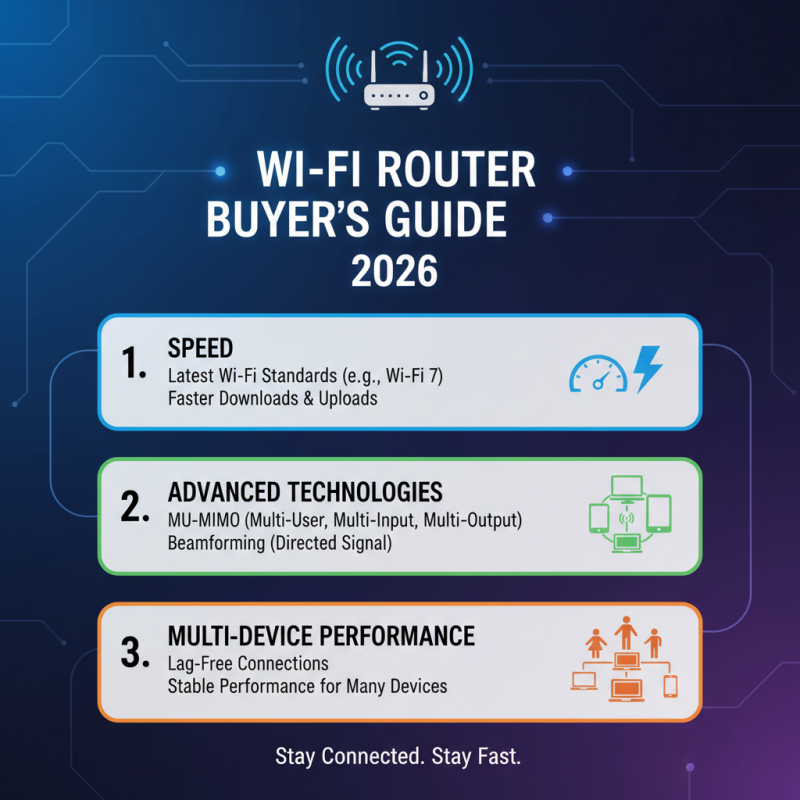
When selecting a wireless router in 2026, several key features should be prioritized. Speed is crucial. Look for routers that support the latest Wi-Fi standards, enabling faster download and upload rates. Advanced technologies like MU-MIMO and beamforming enhance performance. These features allow multiple devices to connect without sacrificing speed.
Coverage area is also important. Consider routers with a wide range and the ability to cover large homes. Mesh systems could be a great option for extensive spaces. They distribute signals more evenly, eliminating dead zones. Stability and reliability matter too. A reliable router should handle multiple devices smoothly.
Don't overlook security features. With increased online threats, robust security protocols are essential. Look for routers offering WPA3 encryption for better protection. Parental controls are valuable for families, allowing users to manage internet access for children. While many routers offer these features, users must ensure they are activated for maximum effectiveness.
Types of Wireless Routers: Understanding Your Options for 2026
When selecting a wireless router in 2026, understanding the types available is crucial. Routers fall into several categories. Each type has unique features that cater to different needs and environments. For instance, a dual-band router can operate on both 2.4 GHz and 5 GHz frequencies. This flexibility allows for smoother streaming and gaming experiences.
Mesh routers are also gaining popularity. They provide seamless coverage over larger areas. Ideal for homes with multiple rooms, these systems can eliminate dead zones. However, they may require more initial setup and a higher budget. Traditional routers have their place too. They are usually more straightforward to set up and can efficiently handle basic internet needs.
Choosing the right router type depends on your specific requirements. Consider your internet usage patterns. Do you stream, game, or work from home? Reflect on your living space layout. Maybe a single router suffices, or perhaps a mesh network would be better. Your decision will shape your internet experience in 2026.
Performance Metrics: Speed, Range, and Connectivity in Wireless Routers
When considering wireless routers, performance metrics are crucial. Speed is a primary factor. As reported by various industry experts, many routers now support speeds exceeding 1 Gbps. However, achieving these speeds often requires optimal conditions. Distance and obstacles can significantly lower the actual speed experienced by users.
Range is another critical aspect. High-end routers can cover areas up to 3,000 square feet or more. Yet, physical barriers like walls can disrupt the signal. The average household may not benefit from maximum range due to furniture or other obstructions. Additionally, devices that connect to the router also vary in their capacity. Not all devices can utilize the highest speeds and ranges advertised.
Connectivity options represent an additional layer of complexity. Dual-band and tri-band routers offer multiple frequencies. Experts suggest that dual-band options are sufficient for typical households. Still, a tri-band router may be ideal for larger families with many connected devices. However, choosing a router that supports the latest Wi-Fi standards is essential. Many existing devices may not yet support the latest protocols. These discrepancies can lead to underwhelming performance despite high expectations.
Security Features to Look for in a 2026 Wireless Router
When selecting a wireless router for 2026, security features must be a top priority. Many routers now include advanced encryption methods. WPA3 encryption is becoming the standard. It offers better protection against unauthorized access. Look for routers that support this feature.
Consider routers with built-in VPN capabilities. This adds an extra layer of privacy. It’s essential in today’s digital landscape. A robust firewall is also crucial. It protects your network from potential threats. Not all routers provide the same level of security.
Here are a few tips:
- Always update your router’s firmware.
- Change the default usernames and passwords.
- Regularly check connected devices on your network.
Not every router meets these security standards. Some may fall short, leaving your data vulnerable. Assess your needs carefully. Ensure that your chosen device aligns with best practices for security.
Best Wireless Router Options for 2026 - Security Features
| Router Model |
Wi-Fi Standard |
Security Features |
Maximum Speed |
Number of Ports |
| Model A |
Wi-Fi 6E |
WPA3, VPN Support |
10 Gbps |
4 |
| Model B |
Wi-Fi 6 |
WPA3, Firewall Protection |
5 Gbps |
5 |
| Model C |
Wi-Fi 6 |
WPA2/WPA3, Guest Network |
4 Gbps |
3 |
| Model D |
Wi-Fi 5 |
WPA2, Parental Controls |
3 Gbps |
4 |
Future-Proofing: Ensuring Your Router Meets Upcoming Technology Trends
When choosing a wireless router for 2026, future-proofing is essential. Technology changes rapidly. You need a router that adapts to these shifts. Look for routers that support the latest Wi-Fi standards. Wi-Fi 6E is gaining traction now and will likely be essential soon. This standard offers faster speeds and better capacity for multiple devices. With smart homes on the rise, this capability is important.
Also, consider the changing landscape of internet usage. Streaming, gaming, and remote work all demand more from your network. A router that ensures stable performance under pressure is crucial. Mesh networks are becoming popular too. They create seamless coverage throughout your home. It's worth looking into multiple access points for larger spaces. However, these systems can be complex and may require extra setup.
Lastly, security features should not be overlooked. With increasing cyber threats, strong security protocols are a must. Be wary of outdated firmware. Regular updates are vital to protect your devices. Balancing speed, coverage, and security is challenging. Take the time to research and analyze options. Make your purchase decision based on your actual needs, not just trends.
Best Wireless Router Options for 2026
This chart illustrates the key features to consider when choosing a wireless router for 2026, focusing on the most important performance metrics and technology trends.